<?xml version="1.0" encoding="utf-8"?><feed xmlns="http://www.w3.org/2005/Atom" ><generator uri="https://jekyllrb.com/" version="3.10.0">Jekyll</generator><link href="https://agrimaseth.github.io/feed.xml" rel="self" type="application/atom+xml" /><link href="https://agrimaseth.github.io/" rel="alternate" type="text/html" /><updated>2025-03-25T06:22:00-07:00</updated><id>https://agrimaseth.github.io/feed.xml</id><title type="html">Agrima Seth</title><subtitle>Ph.D. candidate, School of Information, Computational Social Science</subtitle><author><name>Agrima Seth</name><email>agrima@umich.edu</email></author><entry><title type="html">COVID-19 Risk Calculator</title><link href="https://agrimaseth.github.io/posts/2021/10/blog-post-6/" rel="alternate" type="text/html" title="COVID-19 Risk Calculator" /><published>2021-10-26T00:00:00-07:00</published><updated>2021-10-26T00:00:00-07:00</updated><id>https://agrimaseth.github.io/posts/2021/10/blog-post-6</id><content type="html" xml:base="https://agrimaseth.github.io/posts/2021/10/blog-post-6/"><![CDATA[<p>With the world trying to resume all activities as they were before the COVID-19 pandemic, citizens need to judge their risk levels from gatherings and activities. The numerous determinants and the evolving nature of risk make it confusing for the public to understand the risk from various activities. Hence we created this <a href="https://realsciencecommunity.shinyapps.io/riskcalculator/">risk calculator app</a>, the paper was accepted at <a href="https://www.nature.com/articles/s41598-023-40338-8">Nature Scientific Reports</a>.</p>

<p>This work was done in collaboration with <a href="https://www.linkedin.com/in/christin-glorioso-md-phd-39627719/">Dr. Christin Glorioso</a> (Epidemiologist, Physician, and Founder and CEO of the non-profit research organization, Academics for the Future of Sciences (AFS))</p>]]></content><author><name>Agrima Seth</name><email>agrima@umich.edu</email></author><category term="COVID-19" /><category term="Risk Calculator" /><summary type="html"><![CDATA[With the world trying to resume all activities as they were before the COVID-19 pandemic, citizens need to judge their risk levels from gatherings and activities. The numerous determinants and the evolving nature of risk make it confusing for the public to understand the risk from various activities. Hence we created this risk calculator app, the paper was accepted at Nature Scientific Reports.]]></summary></entry><entry><title type="html">Anomaly Detection using Machine Learning for Data Quality Monitoring in the CMS Experiment</title><link href="https://agrimaseth.github.io/posts/2017/08/blog-post-5/" rel="alternate" type="text/html" title="Anomaly Detection using Machine Learning for Data Quality Monitoring in the CMS Experiment" /><published>2017-08-21T00:00:00-07:00</published><updated>2017-08-21T00:00:00-07:00</updated><id>https://agrimaseth.github.io/posts/2017/08/blog-post-5</id><content type="html" xml:base="https://agrimaseth.github.io/posts/2017/08/blog-post-5/"><![CDATA[<p>The project aims at applying recent progress in Machine Learning techniques to the automation of quality assessment allowing the check of large volumes of data in real-time and improving the ability to detect unexpected features. The test implementation was presented to a panel of Physicist and Computer scientists; I was awarded the 2nd position for my work.</p>

<p>I was selected as a summer research student under the <a href="https://openlab.cern/">Openlab Program</a> to collaborate with Dr. Gianluca Cerminara and Adrian Alan Pol of the <a href="https://cms.cern/detector">Compact Muon Solenoid group at CERN</a></p>

<p>The project aims at applying recent progress in Machine Learning techniques to the automation of quality assessment allowing the check of large volumes of data in real-time and improving the ability to detect unexpected features. A test implementation using an unsupervised machine learning model (autoencoder) focused on the data of one of the CMS muon detectors (drift tubes) has been developed and bench-marked on real and fake data.</p>

<ul>
  <li><a href="https://cds.cern.ch/record/2280012">Openlab Presentation of the project</a></li>
  <li><a href="/files/Report_CERN.pdf">Report</a></li>
</ul>]]></content><author><name>Agrima Seth</name><email>agrima@umich.edu</email></author><category term="Anomaly detection" /><category term="Autoencoder" /><category term="CMS Experiment, CERN" /><category term="High Energy Physics Experiment" /><summary type="html"><![CDATA[The project aims at applying recent progress in Machine Learning techniques to the automation of quality assessment allowing the check of large volumes of data in real-time and improving the ability to detect unexpected features. The test implementation was presented to a panel of Physicist and Computer scientists; I was awarded the 2nd position for my work.]]></summary></entry><entry><title type="html">CERN Webfest</title><link href="https://agrimaseth.github.io/posts/2017/07/hack-1/" rel="alternate" type="text/html" title="CERN Webfest" /><published>2017-07-23T00:00:00-07:00</published><updated>2017-07-23T00:00:00-07:00</updated><id>https://agrimaseth.github.io/posts/2017/07/hack-1</id><content type="html" xml:base="https://agrimaseth.github.io/posts/2017/07/hack-1/"><![CDATA[<p>Created a text summarization and analytics platform that works on top of messaging systems being used at CERN, Switzerland. Programmed various natural language processing and machine learning routines for answering users’ queries (summary, most important chats and keywords). <a href="https://github.com/parityapp/">ParityApp</a></p>

<!-- Headings are cool
======

You can have many headings
======

Aren't headings cool?
------ -->]]></content><author><name>Agrima Seth</name><email>agrima@umich.edu</email></author><category term="hackathon" /><category term="NLP" /><summary type="html"><![CDATA[Created a text summarization and analytics platform that works on top of messaging systems being used at CERN, Switzerland. Programmed various natural language processing and machine learning routines for answering users’ queries (summary, most important chats and keywords). ParityApp]]></summary></entry><entry><title type="html">Geo-spatial Trends of News Dissemination on Twitter and Conventional News Channels</title><link href="https://agrimaseth.github.io/posts/2016/02/blog-post-4/" rel="alternate" type="text/html" title="Geo-spatial Trends of News Dissemination on Twitter and Conventional News Channels" /><published>2016-02-15T00:00:00-08:00</published><updated>2016-02-15T00:00:00-08:00</updated><id>https://agrimaseth.github.io/posts/2016/02/blog-post-4</id><content type="html" xml:base="https://agrimaseth.github.io/posts/2016/02/blog-post-4/"><![CDATA[<p>A comparative study on the flow of information about a catastrophic topic on Twitter and conventional news channels. Paper Published at <a href="https://iceis.scitevents.org/Home.aspx?y=2017#:~:text=The%20purpose%20of%20the%2019th,business%20applications%20of%20information%20systems.">19th International Conference on Enterprise Information Systems</a>. Awarded first position in Amalgam, alumni sponsored competition at Army Institute of Technology, 2016.</p>

<p>For my undergraduate capstone project, I worked as an undergraduate research student at <a href="https://www.irit.fr/en/home/">Institut de Recherche en Informatique de Toulouse</a> under the guidance of <a href="https://scholar.google.com/citations?hl=en&amp;user=V-Nyr0wAAAAJ&amp;view_op=list_works&amp;sortby=pubdate">Prof. Josiane Mothe</a>.</p>

<p>The project aims at determining the flow of a particular news article on Twitter and on news channels. Further, based on the flow, we determined how the two mediums of flow affect each other in terms of the subject’s popularity.</p>]]></content><author><name>Agrima Seth</name><email>agrima@umich.edu</email></author><category term="Twitter" /><category term="Data Visualisation" /><category term="Machine Learning" /><summary type="html"><![CDATA[A comparative study on the flow of information about a catastrophic topic on Twitter and conventional news channels. Paper Published at 19th International Conference on Enterprise Information Systems. Awarded first position in Amalgam, alumni sponsored competition at Army Institute of Technology, 2016.]]></summary></entry><entry><title type="html">Information Retrieval and Query Reformulation</title><link href="https://agrimaseth.github.io/posts/2015/07/blog-post-3/" rel="alternate" type="text/html" title="Information Retrieval and Query Reformulation" /><published>2015-07-30T00:00:00-07:00</published><updated>2015-07-30T00:00:00-07:00</updated><id>https://agrimaseth.github.io/posts/2015/07/blog-post-3</id><content type="html" xml:base="https://agrimaseth.github.io/posts/2015/07/blog-post-3/"><![CDATA[<p>Indexing and evaluating the indexed ClueWeb12-B dataset and wrote an algorithm for automated query reformulation using concepts of graph theory</p>

<p>During June-July 2015, I got an opportunity to work as undergraduate summer research at  <a href="https://www.irit.fr/en/home/">Institut de Recherche en Informatique de Toulouse</a> under the guidance of <a href="https://scholar.google.com/citations?hl=en&amp;user=V-Nyr0wAAAAJ&amp;view_op=list_works&amp;sortby=pubdate">Prof. Josiane Mothe</a> with her team SIG.</p>

<p>During this period, I performed a comparative study intending to find a better method of indexing Clueweb12-B(shards and complete dataset) using terrier. After that, I devised a method for automated query reformulation using the concepts of graph theory such as indegree of nodes linked to the query terms and used them to query the ClueWeb12-B dataset. The algorithm showed positive results with a subset of the actual data, and the testing for the complete dataset is scheduled for December 2015.</p>]]></content><author><name>Agrima Seth</name><email>agrima@umich.edu</email></author><category term="Graph Theory" /><category term="Query reformulation" /><category term="Clueweb12-B" /><summary type="html"><![CDATA[Indexing and evaluating the indexed ClueWeb12-B dataset and wrote an algorithm for automated query reformulation using concepts of graph theory]]></summary></entry><entry><title type="html">Sparse Model and SVM for proactive fault detection</title><link href="https://agrimaseth.github.io/posts/2014/12/blog-post-2/" rel="alternate" type="text/html" title="Sparse Model and SVM for proactive fault detection" /><published>2014-12-30T00:00:00-08:00</published><updated>2014-12-30T00:00:00-08:00</updated><id>https://agrimaseth.github.io/posts/2014/12/blog-post-2</id><content type="html" xml:base="https://agrimaseth.github.io/posts/2014/12/blog-post-2/"><![CDATA[<p>Pro-active fault detection in Cloud System using Machine Learning Algorithms like- Sparse Coding and Single label SVM</p>

<p>In November 2014, I got an opportunity to work as a research apprentice to <a href="https://scholar.google.co.in/citations?hl=en&amp;user=I4rS3hoAAAAJ&amp;view_op=list_works&amp;sortby=pubdate">Prof M.C. Govil</a> at <a href="http://www.mnit.ac.in/new/">Malaviya National Institute of Technology</a> on fault tolerance in cloud systems.</p>

<p>During, this period I tried re-implementing <a href="https://www.usenix.org/conference/icac13/technical-sessions/presentation/kadirvel">Fault Management in Map-Reduce through Early Detection of Anomalous Nodes” by Selvi Kadirvel, Jeffrey Ho, José A. B. Fortes</a>. I monitored the heartbeat of the Hadoop cluster using Ganglia. Further, I created a  Model and performed Single label SVM to classify the healthy nodes and recognize the anomalous nodes.</p>

<p>The complete project report for the same is available <a href="/files/report2.pdf">here</a>.</p>

<!-- <a href="report2.pdf">REPORT</a>  -->

<!-- Headings are cool
======

You can have many headings
======

Aren't headings cool?
------ -->]]></content><author><name>Agrima Seth</name><email>agrima@umich.edu</email></author><category term="Single class SVM" /><category term="Machine Learning" /><category term="Fault detection" /><summary type="html"><![CDATA[Pro-active fault detection in Cloud System using Machine Learning Algorithms like- Sparse Coding and Single label SVM]]></summary></entry><entry><title type="html">A basic Mario Platform Game using pygame</title><link href="https://agrimaseth.github.io/posts/2014/10/hack-2/" rel="alternate" type="text/html" title="A basic Mario Platform Game using pygame" /><published>2014-10-22T00:00:00-07:00</published><updated>2014-10-22T00:00:00-07:00</updated><id>https://agrimaseth.github.io/posts/2014/10/hack-2</id><content type="html" xml:base="https://agrimaseth.github.io/posts/2014/10/hack-2/"><![CDATA[<p>My interest in Computer graphics led me to animations. This is my first animation using pygame. This game consists of two levels and rotating platforms that Mario has to cross.</p>

<p>The working <a href="https://youtu.be/RDAecdcyvh8">video</a> can be found here; its source code is available at <a href="https://github.com/agrimaseth/games">Github</a>.</p>

<!-- Headings are cool
======

You can have many headings
======

Aren't headings cool?
------ -->]]></content><author><name>Agrima Seth</name><email>agrima@umich.edu</email></author><category term="Pygame" /><summary type="html"><![CDATA[My interest in Computer graphics led me to animations. This is my first animation using pygame. This game consists of two levels and rotating platforms that Mario has to cross.]]></summary></entry><entry><title type="html">Geometric Modelling</title><link href="https://agrimaseth.github.io/posts/2014/06/blog-post-1/" rel="alternate" type="text/html" title="Geometric Modelling" /><published>2014-06-10T00:00:00-07:00</published><updated>2014-06-10T00:00:00-07:00</updated><id>https://agrimaseth.github.io/posts/2014/06/blog-post-1</id><content type="html" xml:base="https://agrimaseth.github.io/posts/2014/06/blog-post-1/"><![CDATA[<p>While working with Computer Graphics at IIST. I was assigned the task of studying various methods for re-creating real-world objects. To begin with, I studied the Geometric Modelling method. This required me to study multiple mathematical algorithms and concepts like bezier curves, fractals for the successful re-creation of shapes and different lighting models like Monte-Carlo ray-tracing method.</p>

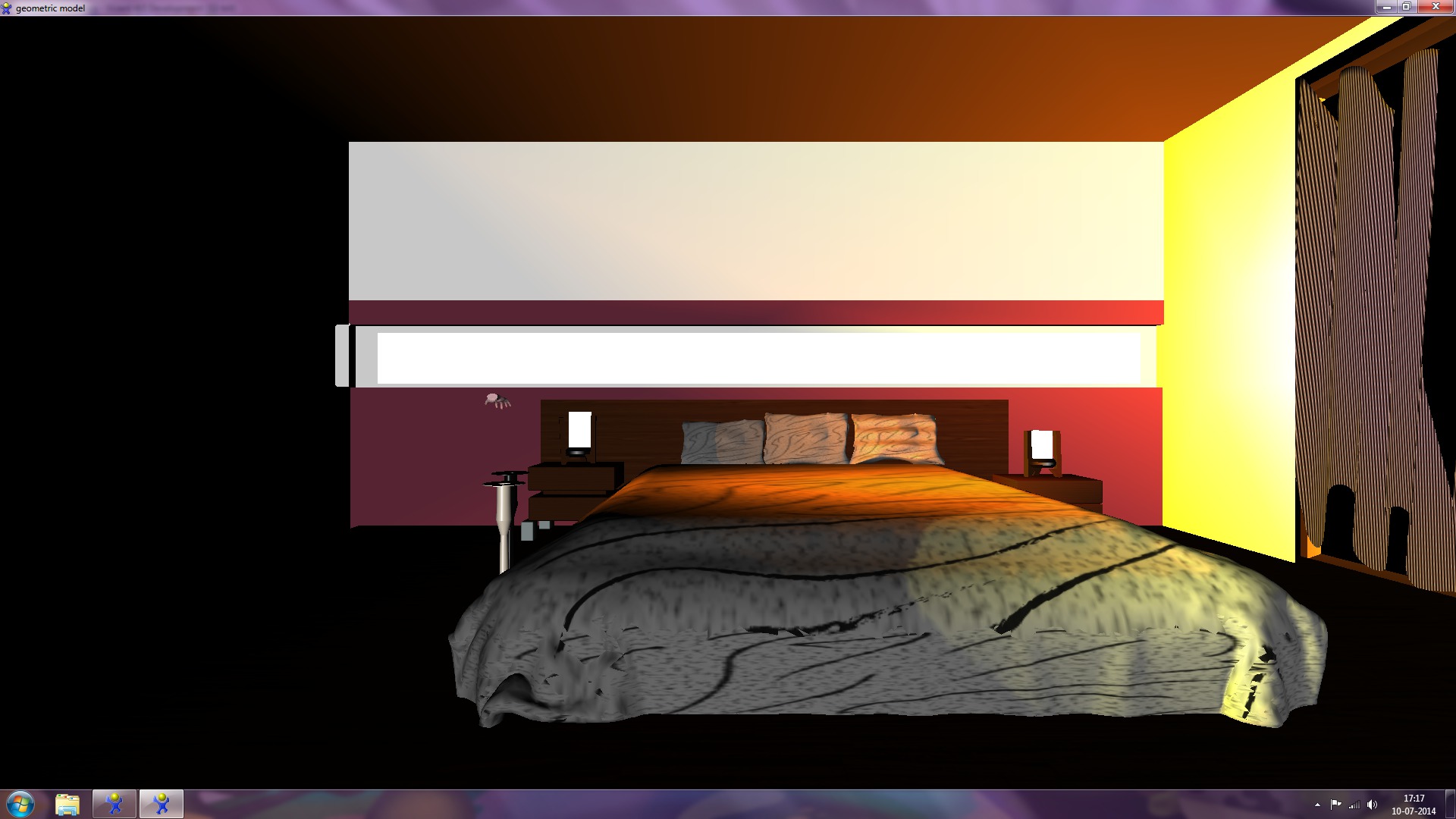
<p>The result for the same is displayed below:</p>

<p><img src="/images/model2.jpg" alt="Image created using geometric modeling" /></p>

<p>After successfully creating the above environment, I decided to use 5dt Data Gloves to navigate through the system and give an immersive 3D animation. I used the Vizard platform to perform the animation.</p>

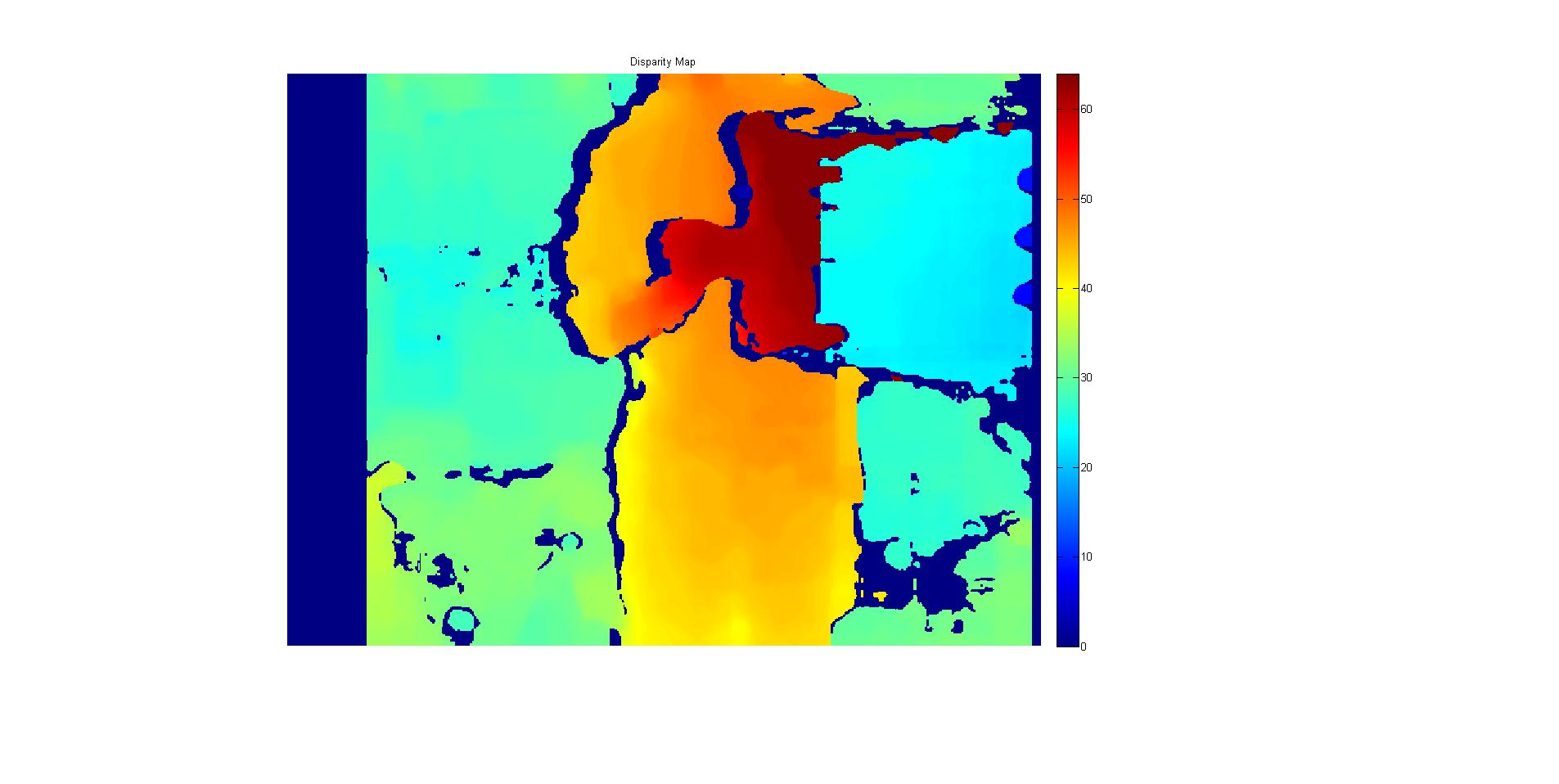
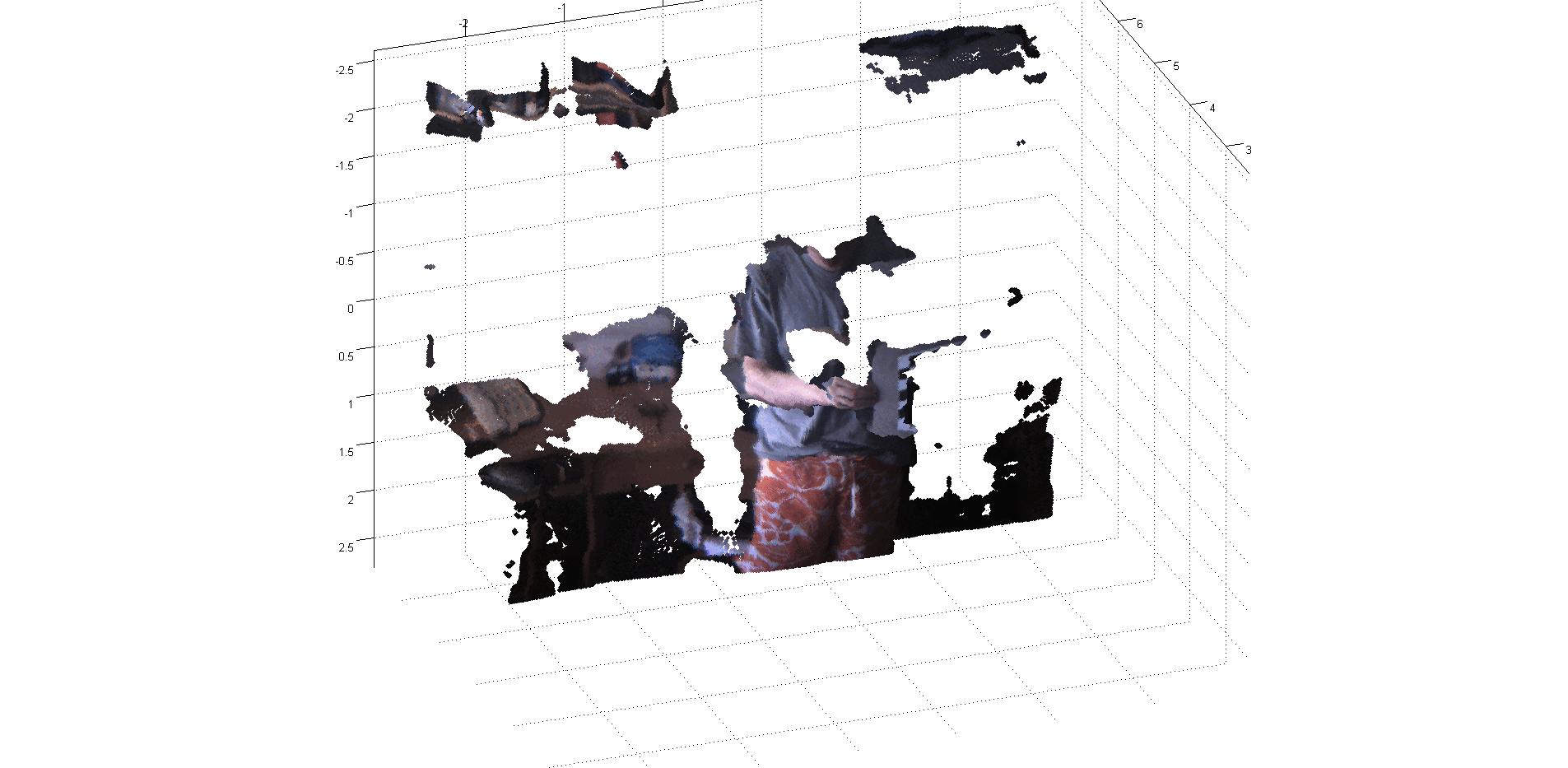
<p>Geometric Modelling presented some major disadvantages, from being labor-intensive to time-consuming. Thus, I used the 3D warping technique. In this, several 2-D images were used, and after mapping the corresponding pixels in these images, Point Cloud Library was used to create their 3-D model in OpenCV using python. The result for the same is displayed below:</p>

<p><img src="/images/disp.jpg" alt="Image Based Rendering 3d Warping technique" />
<img src="/images/cloud1.jpg" alt="Image Based Rendering 3d Warping technique" /></p>

<p>After the above implementation, I performed a comparative study of Geometric Modeling and Image based Rendering.<a href="http://arxiv.org/abs/1409.5024">Pre-print</a> for which is at Arxiv.</p>

<!-- Headings are cool
======

You can have many headings
======

Aren't headings cool?
------ -->]]></content><author><name>Agrima Seth</name><email>agrima@umich.edu</email></author><category term="Computer Vision" /><category term="IIST" /><summary type="html"><![CDATA[While working with Computer Graphics at IIST. I was assigned the task of studying various methods for re-creating real-world objects. To begin with, I studied the Geometric Modelling method. This required me to study multiple mathematical algorithms and concepts like bezier curves, fractals for the successful re-creation of shapes and different lighting models like Monte-Carlo ray-tracing method.]]></summary></entry><entry><title type="html">Solar Tracking System</title><link href="https://agrimaseth.github.io/posts/2013/12/hack-3/" rel="alternate" type="text/html" title="Solar Tracking System" /><published>2013-12-28T00:00:00-08:00</published><updated>2013-12-28T00:00:00-08:00</updated><id>https://agrimaseth.github.io/posts/2013/12/hack-3</id><content type="html" xml:base="https://agrimaseth.github.io/posts/2013/12/hack-3/"><![CDATA[<p>An embedded system to track the position of the sun throughout the day to increase the efficiency of the sunlight harvesting systems.</p>

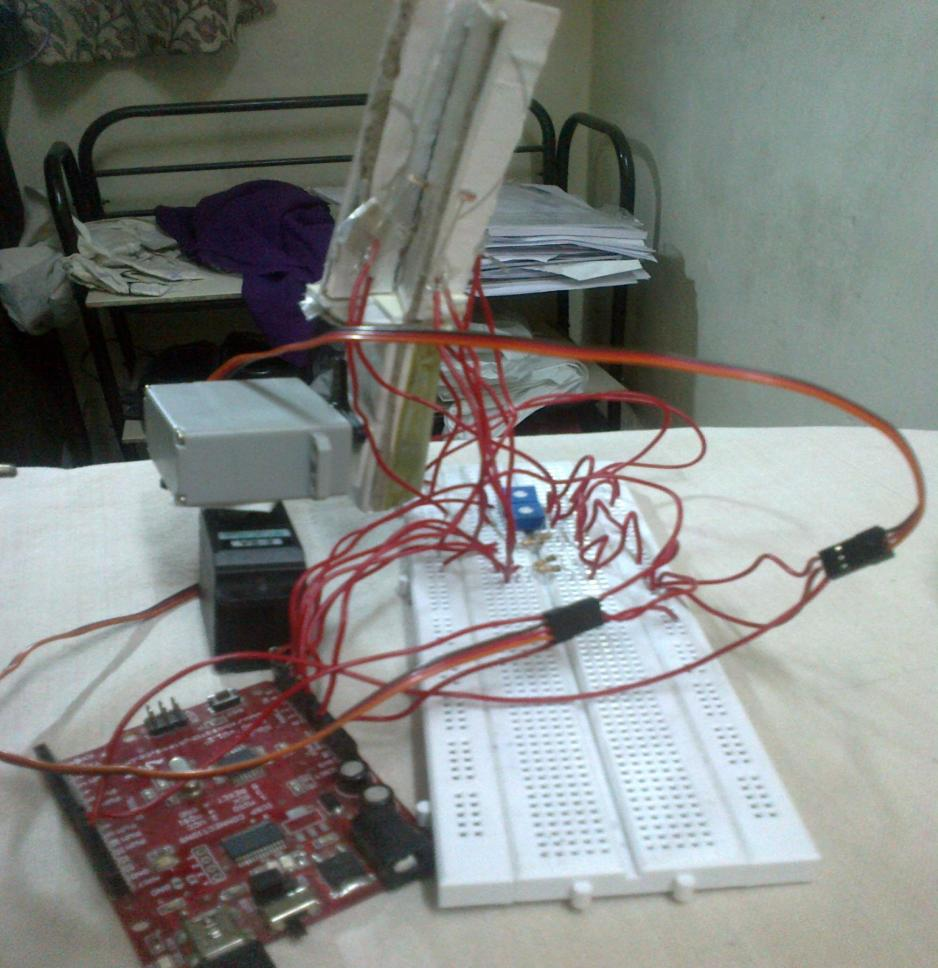
<p>The position of the sun continuously keeps changing throughout the day. Hence to make the solar devices more efficient, I created a device that changes direction with change in the light source position using Arduino, servo motors as the rotatory mechanism.</p>

<p><img src="/images/msp.png" alt="solar track" /></p>

<!-- Headings are cool
======

You can have many headings
======

Aren't headings cool?
------ -->]]></content><author><name>Agrima Seth</name><email>agrima@umich.edu</email></author><category term="embedded system" /><summary type="html"><![CDATA[An embedded system to track the position of the sun throughout the day to increase the efficiency of the sunlight harvesting systems.]]></summary></entry></feed>